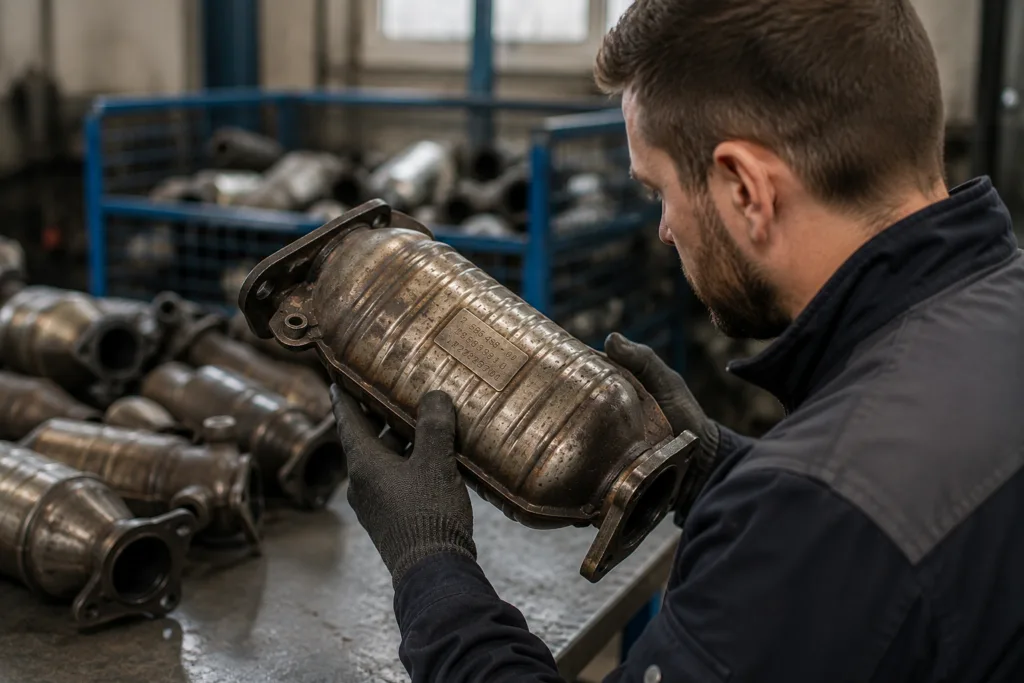
In the scrap and recycling market, small identification errors can create surprisingly large pricing gaps. That is especially true with BMW units, where appearance, model overlap, and part-code confusion often lead sellers to misjudge material value. A yard, dismantler, or collector may believe they are holding a high-value catalytic unit, only to discover later that the core chemistry, substrate load, or series classification was different from what they assumed. On the other hand, undervaluation is just as common, and that means money is often left on the table before the material even reaches assay.
For businesses handling a catalytic converter, accurate identification is not just a technical detail. It affects buying decisions, resale confidence, negotiations, logistics planning, and overall margin. In a market where precious metal content drives settlement, the gap between “looks similar” and “correctly identified” can be costly.
BMW scrap units are a good example of why process matters. Similar housings may contain different loadings, the same vehicle generation may use multiple converter types, and aftermarket replacements can dramatically change expected value. Understanding the most common identification mistakes helps sellers protect themselves and work more effectively with professional recyclers.
Why BMW units are often mispriced
BMW platforms are known for engineering variation across models, engines, years, and emissions configurations. That means two converters that look nearly identical at first glance may not carry the same recoverable metal value. Even within the same model family, subtle differences in part numbers, dimensions, weight, and internal composition can change the economics.
This is where many mistakes begin. A seller may rely on visual familiarity, an old buying sheet, or a generic online reference instead of using a structured identification process. When that happens, pricing can swing in either direction. Overpaying creates obvious risk for buyers, but underpricing is a quieter problem that hurts suppliers and weakens trust across the supply chain.
Companies with specialized processing and sampling capabilities, such as Recohub, help reduce that uncertainty by connecting collection, recycling, and refining with a more disciplined approach to catalyst handling. For suppliers, that matters because valuation becomes less dependent on guesswork and more aligned with what the material actually contains.
The most common BMW converter identification mistakes
1. Judging by the shell alone
One of the biggest mistakes is assuming the outer housing tells the full story. Shape and casing style can be helpful clues, but they are not enough on their own. BMW units often resemble one another across production runs, and non-original units may mimic OEM dimensions closely enough to mislead even experienced handlers.
A converter should never be valued solely because it “looks like” a premium BMW piece. Exterior condition, weld style, inlet and outlet layout, and heat shield remnants can all provide hints, but the housing is only part of the identification picture.
2. Ignoring part numbers or reading them incorrectly
Part numbers remain one of the most important reference points, yet they are frequently missed due to corrosion, dirt, cuts, or rushed intake procedures. In many cases, the number is partially visible, and sellers fill in the blanks based on assumption. That can lead to misclassification, especially when one digit or letter separates a higher-value unit from a lower-value one.
It is worth slowing down for careful cleaning, better lighting, and proper documentation. A rushed read can distort value just as much as having no code at all.
3. Confusing OEM and aftermarket material
This is a major issue across the converter recycling trade. An OEM BMW unit may command significantly different value than an aftermarket replacement, even if both came off the same vehicle type. Sellers who price based on vehicle brand alone often assume “BMW equals premium,” but that is not always true once replacement history enters the picture.
Aftermarket units may have lower precious metal loading, different internal structures, or brand-specific manufacturing differences that affect recovery. If the unit has already been replaced during the vehicle’s lifetime, the expected scrap value may be far from the original benchmark.
4. Mixing gasoline and diesel assumptions
Another avoidable error is assuming all BMW exhaust-related scrap follows the same value logic. Gasoline and diesel systems differ, and the associated treatment components can vary considerably. Misidentifying the application can produce unrealistic price expectations and flawed sorting decisions.
Anyone buying or aggregating BMW exhaust material should confirm system type rather than relying on broad assumptions from model badges alone.
5. Overlooking regional and production differences
BMW vehicles built for different markets may use different emissions setups. Year-to-year production changes also matter. A unit from one region or compliance category may not match the expected loading of a visually similar unit from another. This becomes especially important when material is sourced from mixed channels, including imported vehicles, salvage auctions, and dismantling streams with incomplete documentation.
For recyclers, this is one reason why standardized intake and verification procedures are so valuable. They reduce the risk of assigning a single market value to materials that should be separated.
6. Relying on outdated pricing lists
Reference lists are useful, but they are not a substitute for current market intelligence and proper downstream evaluation. Precious metal prices move, recycling channels evolve, and certain categories become more closely analyzed over time. A list that worked well six months ago may not reflect today’s reality.
This is especially dangerous when sellers apply old assumptions to a bmw converter that already has identification uncertainty. Layering outdated pricing on top of incomplete classification compounds the risk.
How these mistakes affect scrap value in practice
The financial impact shows up in several ways. First, there is direct underpayment or overpayment at the point of purchase. Second, there are sorting inefficiencies that cause mixed lots to be valued too conservatively. Third, disputes emerge later when the material reaches processing and final recovery expectations do not match the initial classification.
Even a modest error rate can have a real effect over time. For dismantlers and bulk suppliers handling repeated volumes, a few misidentified BMW units per month can translate into a meaningful loss across the year. For smaller operators, a single incorrectly valued batch can damage cash flow and confidence.
That is why experienced market participants increasingly favor transparent recycling partners that combine logistics, processing, and analytical rigor rather than relying on surface-level categorization.
Best practices for more accurate identification
- Document every unit clearly: Take consistent photos from multiple angles, including code areas, inlet and outlet configuration, and overall shell profile.
- Separate OEM from aftermarket: Do not group them together during intake or pricing.
- Record vehicle details carefully: Model, engine type, production year, and market can all affect identification accuracy.
- Avoid pricing from appearance alone: Use visual inspection as a starting point, not the final decision.
- Work with specialists: Recyclers with catalyst-focused handling, sampling, and assay processes can reduce uncertainty and support fairer settlement.
- Update references frequently: Market conditions and accepted classifications change, so buying logic should be reviewed often.
Why the right recycling partner makes a difference
Converter recycling is no longer just about collecting scrap and moving it quickly. The most reliable returns come from a chain that understands sourcing, processing, and trade execution together. That is where a specialist like Recohub stands out. With a business model built around connecting collectors, recyclers, and refiners, the company helps restore value from precious-metal-bearing waste through a process-driven approach rather than simple visual buying.
For suppliers, this offers a practical advantage: fewer identification blind spots, stronger confidence in evaluation, and a clearer path from collection to recovery. In a category where BMW units are often misread, those benefits are not theoretical. They directly support better pricing discipline and better commercial outcomes.
If your business handles vehicle scrap, salvage components, or catalyst-bearing material, now is a good time to review how BMW units are identified before they are sold. Tightening that process can prevent costly mistakes, improve negotiations, and create more consistent returns. In a market shaped by detail, the winners are usually the ones who verify first and price second.